
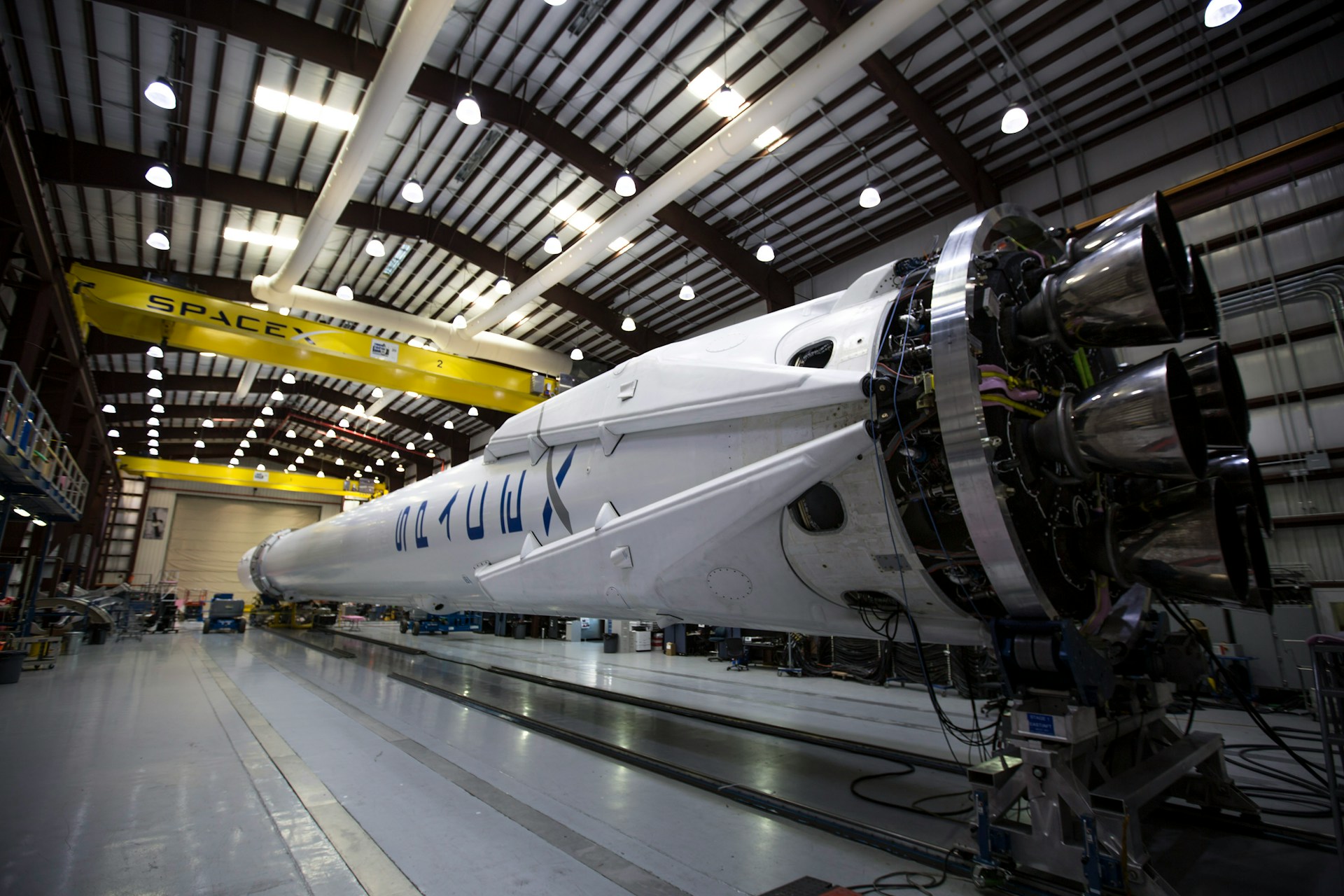
As Elon Musk addressed the World Economic Forum in Davos this January, he laid out a bold timeline for artificial intelligence infrastructure. The lowest-cost place to run AI compute would soon shift from Earth to orbit. Space data centers, he argued, could harness constant solar power and the vacuum of space for cooling.
Here is the kicker: SpaceX has already filed FCC plans for a million-satellite network to support this vision, with xAI integration in the works. Yet AWS CEO Matt Garman told industry leaders in early February that orbital data centers remain "pretty far" from economic reality.
Start here
The short version
- 01Space data centers promise unlimited solar power and vacuum cooling to fuel exploding AI demand, but massive launch costs and technical barriers keep them years away. Elon Musk targets cost leadership in two to three years via million-satellite constellations, yet AWS leadership
- 02Proponents envision compact satellite constellations in sun-synchronous low-Earth orbits.
- 03Challenges abound in the vacuum. Heat dissipation requires massive radiators since traditional air or liquid cooling fails.
Method, source and disclosure
This analysis is prepared by the Market Lens desk from the sources named in the story and publicly available market information. Material revisions appear in the updated timestamp.
View primary source ↗The Orbital Vision
Proponents envision compact satellite constellations in sun-synchronous low-Earth orbits. These clusters would draw near-continuous sunlight with minimal batteries. Early tests include Starcloud's 2025 GPU launch and Google's planned 2027 prototypes under Project Suncatcher.
Google's research outlines modular designs using free-space optical links for tens of terabits per second between satellites. Radiation-hardened TPUs and precise orbital formations aim to match terrestrial performance for distributed machine learning.
Technical Realities
Challenges abound in the vacuum. Heat dissipation requires massive radiators since traditional air or liquid cooling fails. Radiation demands shielding or hardened chips, while inter-satellite coordination must overcome orbital dynamics and potential bit-flip errors.
Launch economics dominate the math. Current costs hover near $3,600 per kilogram. Viability likely requires drops to around $200 per kilogram, expected with next-generation vehicles in the 2030s. A 1 GW orbital facility could cost nearly three times its ground equivalent today.
Impact on Legacy Providers
Why this matters for the finance market: AWS, Microsoft, and Google continue committing hundreds of billions to terrestrial expansions through 2030. Garman highlighted insufficient rocket capacity even for Musk-scale ambitions.
Legacy providers view space as a distant complement at best, not a near-term replacement. Short-term, ground-based hyperscale growth drives cloud revenues while space remains niche for latency-tolerant inference workloads.
The Road Ahead
What changed next could hinge on Starship success and prototype results from 2027 onward. Small-scale demonstrations may arrive by decade's end, but full hyperscale orbital systems likely wait until the 2030s or beyond.
Investors should track launch economics and regulatory filings closely. For now, the cloud market stays firmly Earth-bound, yet the orbital race signals long-term pressure on traditional infrastructure models.
Key Comparisons: Space vs Terrestrial Data Centers
- Power Cost per kW/Year: Orbital ~$14,700 (current) vs Ground $570–$3,000
- Energy Source: Constant solar in optimal orbits vs Grid-dependent with variability
- Cooling: Radiative vacuum vs Water/air systems
- Timeline to Scale: Prototypes 2027, potential viability 2030s vs Immediate hyperscale builds