
Story map
Brent crude traded near $73 a barrel this week, down more than 35% from the $126 peak it hit in early March. That drop tells only part of the story. The commodity most worth watching right now barely trades on a public exchange at all: helium, a byproduct of Qatari natural gas that AI chipmakers and hospitals cannot do without.
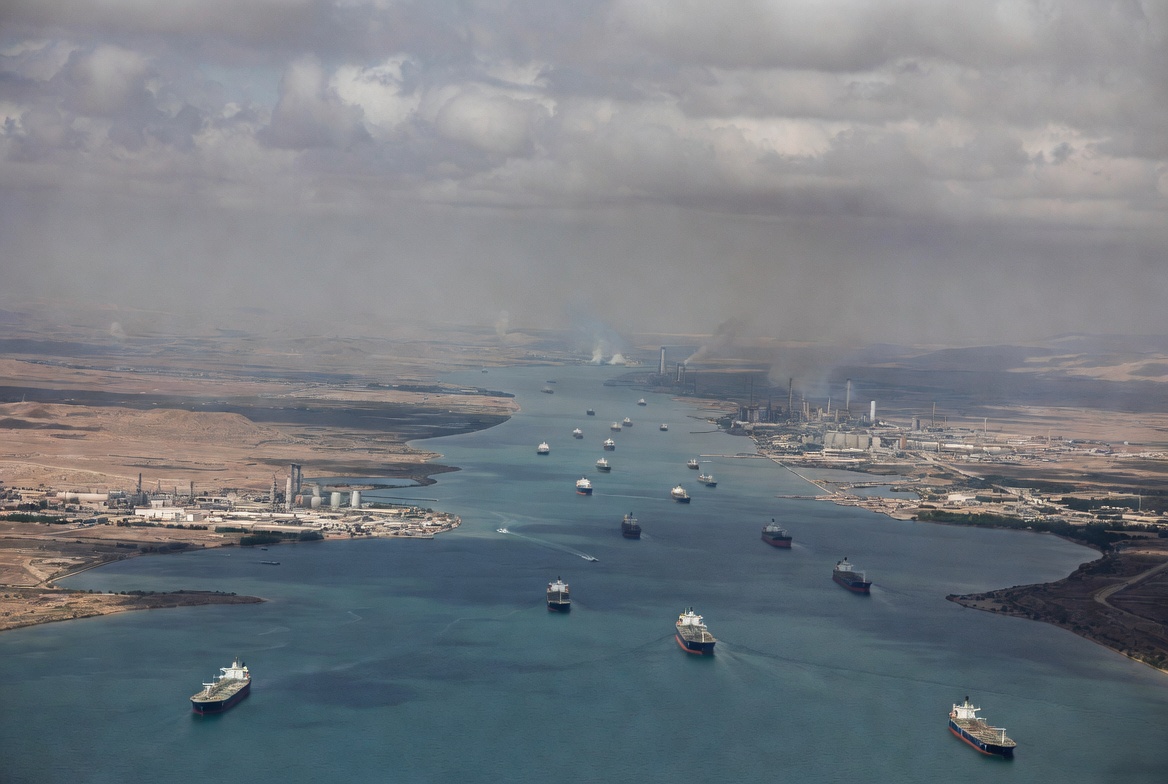
The Strait of Hormuz, the 34-kilometer channel between Iran and Oman that normally carries roughly a fifth of the world's oil and LNG, was effectively shut for more than fifteen weeks after the United States and Israel struck Iran on February 28, 2026. Oil grabbed the headlines. Fertilizer and helium did the quieter, longer-lasting damage, and JPMorgan now expects that damage to push core PCE inflation to 3.4% by year-end, up from a 2.9% forecast at the start of the year.
A June memorandum between Washington and Tehran promised an end to military operations and safe passage through the strait. As of this week, that promise is fraying, and traders who assumed the supply shock was over are recalculating.
Start here
The short version
- 01The 2026 closure of the Strait of Hormuz disrupted not just oil but roughly a third of the world's seaborne fertilizer trade and a third of global helium supply, pushing JPMorgan's core PCE inflation forecast to 3.4% by year-end. A June memorandum promised safe passage and an end
- 02The war started fast and the shipping crisis started faster.
- 03Oil recovered attention because it moves the most money and shows up at the gas pump within days.
Method, source and disclosure
This analysis is prepared by the Market Lens desk from the sources named in the story and publicly available market information. Material revisions appear in the updated timestamp.
View primary source ↗The Fifteen Weeks That Shut the Gulf
The war started fast and the shipping crisis started faster.
Israeli and US strikes on February 28 killed Iran's supreme leader and hit military and nuclear sites across the country. Within days, Iran's Revolutionary Guard declared the Strait of Hormuz closed to what it called unfriendly nations, laid sea mines, and began attacking commercial vessels. War-risk insurers pulled coverage almost immediately, which mattered more than any government declaration. Without insurance, a $200 million supertanker simply does not sail.
Tanker traffic collapsed within days of the first strikes. Major shipping lines, including Maersk, CMA CGM, and Hapag-Lloyd, suspended transits. By early April, the International Maritime Organization counted roughly 1,000 ships and 20,000 crew stranded in the Persian Gulf, some for more than a hundred days.
Brent crude crossed $100 a barrel on March 8 for the first time in four years and eventually peaked near $126, the largest one-month jump in oil prices on record. Barclays estimated a prolonged closure could remove 13 million to 14 million barrels a day from the market, a scale of disruption the International Energy Agency's Fatih Birol called the largest since the 1973 oil crisis.
The closure did not run in a straight line. Iran opened the strait to "friendly" shipping at points during the conflict, sometimes charging tolls reported as high as $2 million per vessel. A ceasefire in April briefly restored something close to normal traffic before it broke down again in June. Fifteen weeks is the working estimate for how long shipping was materially restricted, not a single continuous blackout.
Context
Beyond the Oil Headline: Why This Shock Runs Deeper
Oil recovered attention because it moves the most money and shows up at the gas pump within days. Two slower-moving commodities did more lasting damage to supply chains that have nothing to do with energy markets.
The Persian Gulf supplies a disproportionate share of the world's fertilizer and helium, and neither can be quickly sourced elsewhere. Fertilizer has no strategic reserve anywhere in the world. Helium cannot be stockpiled cheaply because it leaks through almost any container over time.
Both commodities also share a second trait: their supply chains run through the same physical infrastructure as oil and gas. Qatar's Ras Laffan Industrial City, hit by Iranian missiles in March, produces both LNG and the ammonia feedstock for fertilizer, plus the helium extracted as a byproduct of gas processing. One strike zone interrupted three separate global markets simultaneously.
That overlap is why analysts at Morningstar and elsewhere have warned that even a full reopening of the strait will not quickly fix these markets. Facility damage, once done, takes months to repair regardless of what happens to shipping lanes.
Market data
Inside the Fertilizer Squeeze
Roughly a third of the world's seaborne fertilizer trade normally moves through the Strait of Hormuz. The Gulf region supplies something close to 40% of globally traded urea and around a quarter of the world's ammonia, with Qatar's QAFCO complex alone handling an estimated 14% of global urea trade.
When the strait closed, none of that could be quickly rerouted. Unlike the 2022 fertilizer shock that followed Russia's invasion of Ukraine, this supply sat physically trapped behind a single chokepoint rather than merely facing sanctions or export restrictions.
Prices moved accordingly. Middle East urea export prices roughly doubled between the war's start and late April, according to figures compiled by the International Food Policy Research Institute, while diammonium phosphate, the other major traded fertilizer, rose about 35%. Reuters reported Middle East urea prices climbing from just under $500 to above $700 a metric ton at one stage of the crisis.
The damage extends past nitrogen. Gulf states supply close to half of the world's traded sulfur, an essential input for converting phosphate rock into usable fertilizer. Morocco's OCP Group, the world's largest phosphate exporter, brought forward planned maintenance that cut its output by roughly 30%, a move analysts linked directly to the sulfur shortage rather than routine scheduling. China, which imports roughly 4 million metric tons of sulfur from the Gulf annually, faced the same squeeze.
India sources close to 40% of its urea and phosphate fertilizer from the Middle East and moved quickly to secure alternative cargoes, though officials acknowledged some shipments would arrive too late for the current planting window. Brazil, which imports more than 80% of its fertilizer needs, has comparatively fewer alternative suppliers to turn to.
None of this shows up at the grocery store immediately. Fertilizer costs affect a farmer's planting decisions months before that crop reaches a supermarket shelf, which is precisely why economists at Carnegie and elsewhere have warned that the more painful phase of this shock, higher food prices, is still working its way through the system rather than already reflected in headline numbers.
Market data
The Helium Problem Nobody Priced In
Qatar produces close to a third of the world's helium, extracted as a byproduct of natural gas processing rather than mined as a standalone resource. That production process is exactly why the Hormuz shock hit helium markets even though nobody was fighting over helium directly.
Helium plays two roles that are hard to substitute. In semiconductor manufacturing, it cools equipment during the ultra-precise fabrication steps that produce advanced chips, including the memory and logic chips at the center of the AI buildout. In healthcare, liquid helium keeps the superconducting magnets in MRI scanners at the extremely low temperatures they require to function at all.
Distributors began rationing deliveries by early April. Semiconductor executives speaking at industry conferences in China said the shortage was already tightening production lead times and forcing some companies to search for alternative suppliers outside the Gulf entirely.
A separate wrinkle emerged this month: reports that China has restricted its own helium exports as the Iran war squeezes global supply further, adding a second constraint on top of the Qatari disruption just as chipmakers were adjusting to the first one.
The medical-industry exposure is arguably more consequential for ordinary consumers than the semiconductor angle, since there is no substitute liquid for cooling an MRI magnet. Hospitals with thin helium reserves face a genuinely difficult tradeoff between rationing scan availability and paying sharply higher prices for scarce supply.
How a Shipping Lane Becomes a Fed Problem
The Federal Reserve does not set interest rates based on tanker traffic through the Strait of Hormuz, but the transmission mechanism from that traffic to the inflation data the Fed does watch is short and direct.
May's core PCE reading came in at 3.4% year over year, the highest level since 2023, with the headline figure, which includes food and energy, hitting 4.1%. JPMorgan's mid-year outlook attributes the upward revision in its own year-end forecast, from 2.9% to 3.4%, directly to the combined oil, fertilizer, and helium shock tied to the strait closure.
Energy did the early, visible damage. Gasoline prices tracked crude oil higher through March and April, showing up in the headline PCE figure within weeks. The slower, second-order effect runs through everything built with Gulf-sourced petrochemicals, fertilizer-dependent food production, and helium-dependent manufacturing, categories that take longer to show up in the data and longer still to fade once the initial shock passes.
New Fed Chair Kevin Warsh has signaled less patience with supply-driven inflation than his predecessor, and futures markets have at various points this summer priced in roughly a 60% to 65% probability of a rate hike by September. That calculus shifts with every headline out of the Gulf. Oil fell sharply in mid-June after the initial ceasefire memorandum, briefly easing pressure on the inflation outlook, only for renewed strikes in early July to push crude back up again.
Fed officials, including New York Fed president John Williams, have said they expect inflation to ease later in the year if the Hormuz disruption resolves. That forecast depends entirely on an assumption the market can no longer take for granted.
The Memorandum That Did Not Hold
On June 17, President Trump and Iranian President Masoud Pezeshkian signed a 14-point memorandum of understanding at the Palace of Versailles, declaring an intent toward "immediate and permanent termination of military operations" and setting a 60-day window for a final deal. Iran agreed to allow safe passage of commercial vessels through the strait at no charge for the first 60 days, with a longer-term administration of the waterway to be negotiated separately with Oman.
For about a week, the deal held. Vice President Vance said 16 million barrels of oil transited the strait on June 21, a single-day record even by pre-war standards, and the deal briefly looked durable enough for markets to price out much of the remaining risk premium.
It did not last. Israeli strikes in Lebanon in late June prompted Iran to declare the strait closed again, a claim the US military disputed. Attacks on commercial vessels resumed in early July, and the US responded with fresh strikes on Iranian targets, including one that hit the perimeter of the Bushehr nuclear plant. By July 10, President Trump had publicly declared the ceasefire "over," even as both sides said they remained open to further talks.
As of this week, strait traffic is running at a fraction of pre-war volumes, and the ambiguity written into the original memorandum, which called for Iran to "make arrangements" for safe passage rather than explicitly ceding control of the waterway, has become the central sticking point. Markets that spent late June pricing in a resolution are now pricing in the opposite.
What it means
Positioning for a Shock That Has Not Fully Passed
None of this is a call to buy or sell any specific security, and the durability of the current disruption remains genuinely uncertain. What the past fifteen weeks have shown is which parts of the commodity complex respond fastest, and slowest, to a Gulf shipping disruption, information that matters for how investors think about hedging exposure.
Broad commodity index funds like the Invesco DB Commodity Index Tracking Fund (DBC) captured the initial shock directly, since the fund's holdings span crude oil, agricultural commodities, and industrial metals simultaneously and its methodology is built to benefit when near-term futures prices trade above longer-dated contracts, a pattern that tends to emerge during acute supply disruptions.
For more targeted fertilizer and agriculture exposure, investors typically choose between futures-based funds and equity-based funds, and the distinction matters for how directly a fund tracks a commodity price move.
- Futures-based agriculture funds, such as the Invesco DB Agriculture Fund (DBA) or the Elements Rogers International Commodity Agriculture ETN (RJA), hold rolling futures contracts across grains, oilseeds, and livestock, giving investors direct exposure to price moves in corn, wheat, and soybeans, the crops most sensitive to a spring fertilizer shortage.
- Equity-based agriculture funds, such as the VanEck Agribusiness ETF (MOO), instead hold shares of fertilizer producers, farm equipment makers, and grain traders, offering exposure to the businesses that benefit from higher fertilizer prices rather than the commodity price itself, typically with lower volatility than the futures-based route.
Individual fertilizer producers such as Nutrien, Mosaic, and CF Industries, along with Norway's Yara International, have drawn analyst attention as direct beneficiaries of the pricing dynamic, since higher global urea and phosphate prices flow relatively quickly into their realized selling prices even where their own production sits outside the disrupted Gulf supply chain.
The harder position to build is around helium, since no liquid, exchange-traded helium fund exists in the way commodity index funds exist for oil or grains. Investors looking for helium exposure are largely limited to the handful of publicly traded gas producers and industrial gas companies with helium extraction operations outside Qatar, a much narrower and less liquid trade than the fertilizer or broad commodity options.
If the June memorandum's safe-passage terms are renegotiated and hold through the rest of the summer, the fertilizer and helium shortages should begin easing by autumn, even if elevated prices persist into 2027 given how long Gulf production facilities need to repair. If the ceasefire's collapse in early July marks a return to sustained conflict rather than a temporary flare-up, the inflation pressure JPMorgan built into its 3.4% core PCE forecast will look conservative rather than aggressive, and the commodity trades built around a fifteen-week disruption will need to be rebuilt around a much longer one.